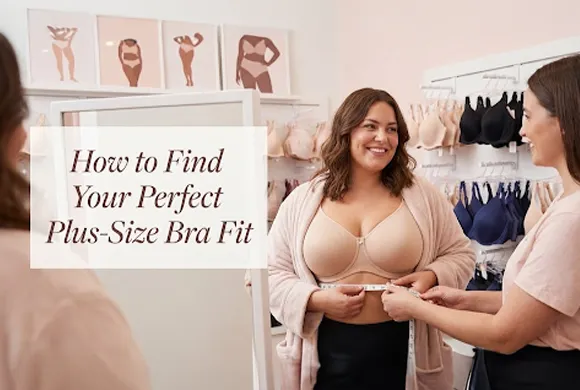
What Exactly Defines a Plus-Size Bra?

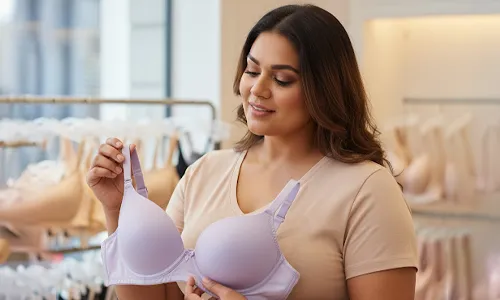
- Reinforced Support: Stronger fabrics and wider bands to carry weight without digging into the skin.
- Increased Cup Capacity: Deeper cups that fully enclose the breast tissue, preventing spillage from the top or sides.
- Thoughtful Design Details: Wider straps, broader side panels and additional hook-and-eye closures that distribute pressure evenly across your shoulders and back.
Why Your Size Might Change Between Brands
One of the biggest frustrations for Indian plus-size women is finding that their bra size changes from brand to brand. This is because different lingerie brands follow different international sizing systems and fit standards. For example:- A DDD cup (US sizing) may be labelled as an E or F cup (UK sizing).
- Some brands run tight in the band, while others offer a more relaxed fit.
When Is It Time for a Bra Refit?
Your body changes and so should your bra size. Regular bra fit checks are essential, especially during these stages:- During and after pregnancy
- Weight fluctuations
- New exercise regimes
- Post-surgery
- General discomfort
- Bras older than 6–9 months of regular wear
A Simple Step-by-Step Guide to Measuring a Plus-Size Bra
Measuring yourself at home is the best place to start. All you need is a soft measuring tape and a mirror.Step 1: Measure Your Underbust (Band Size)
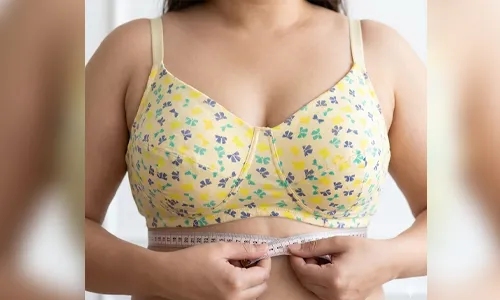
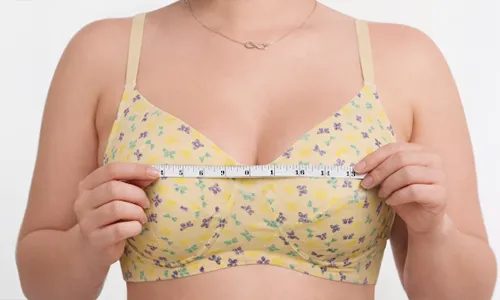
Step 2: Measure Your Overbust (Bust Size)
Step 3: Find Your Cup Size
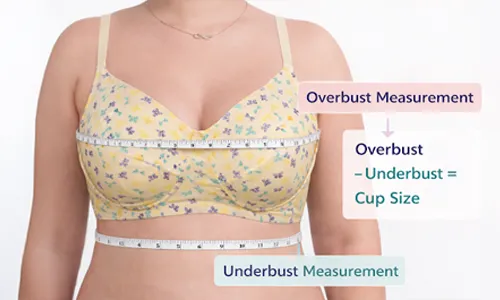
- 1-inch difference = A cup
- 2-inch difference = B cup
- 3-inch difference = C cup
- 4-inch difference = D cup
- 5-inch difference = DD cup and so on
| A Note for My Curvier Sisters: If you have back fat or side spillage, measurements can sometimes be misleading. The tape may pick up extra tissue and suggest a much larger cup size than what actually fits comfortably. If the result feels off, trust your eyes and comfort. Use these numbers as a starting point, then try nearby sizes to see what gives you the best support and shape. |
The Checklist: How Should a Plus-Size Bra Fit?
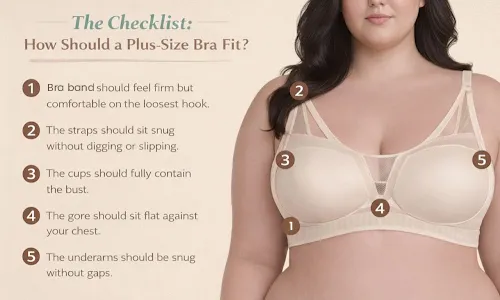
- The Band: It should feel firm but comfortable—snug, not suffocating—on the loosest hook.
- The Straps: They should run parallel and sit lightly. If they dig in, it usually means the band isn’t giving enough support.
- The Cups: No “double-boob” on top or sides, and no loose or wrinkled fabric.
- The Centre Front (Gore): The bit between the cups should sit flat against your chest, not sticking out.
- The Underarms: The fit should be snug—no skin pinching, but no large gaps either.
Expert Tips for the Ideal Plus-Size Bra Fit
- Do the Scoop and Swoop: When wearing your bra, gently reach into the cup and pull breast tissue forward from the underarm. This simple step ensures everything sits inside the wire and can instantly improve the fit.
- Give Underwires Another Chance: Many women dislike wires only because they’ve worn the wrong size. A well-fitted underwire offers excellent lift and support. If you’re shorter, a demi-cup style works well—the wires are shorter and won’t dig into your underarms.
- Try Moulded Cups: Lined or moulded bras help shape and define your bust by creating space between your bust and waist that can actually make you look more lifted and slimmer.
- Look for Extra Support at the Back: Choose bras with wider side panels and 3–4 hook closures for better support and to prevent rolling, digging or discomfort at the back.
- Choose Padded Straps & Breathable Fabrics: Padded straps reduce shoulder pressure, while breathable fabrics keep you comfortable all day—especially in warm weather.
Ready to Find Your Perfect Match?