

By the time you finish reading this post, about three more women in India will have been told they have breast cancer.
The math comes from IARC’s 2022 estimate: about 1.92 lakh new cases in India that year, roughly one woman every three minutes. It’s the most common cancer among Indian women, making up over one in four of all cancers found in them.
Yoga and exercise can’t prevent breast cancer on their own, but they can ease stress and improves sleep, and they work best alongside regular walking and check-ups.
This guide covers how much to move every week, five yoga poses you can do on a bedroom floor, the small habits that add up, and how to pick workout wear so that discomfort never becomes your reason for skipping a day.
Does Exercise Lower the Risk of Breast Cancer?

Yes. Studies from different countries keep finding that active women develop breast cancer less often than inactive ones. The drop is modest, somewhere around 10 to 25 per cent depending on age and how much a woman moves, but it’s real, and it’s one of the few risk factors you can change yourself.
Researchers haven’t pinned down one exact reason. These are the likely ones:
- Weight: Regular movement helps you stay in a healthy weight range. Extra body fat raises oestrogen levels,, and estrogen can fuel some breast cancers.
- Hormones: Exercise helps keep insulin and other hormones better balanced.
- Stress and sleep: Active people tend to sleep better and handle stress better, and both affect the body more than we think.
Exercise isn’t a shield, though. Age, family history and genes also play a part, and none of those can be changed. Think of exercise and regular check-ups as a pair rather than a choice between the two.
How Much Exercise Do You Need in a Week?
The American Cancer Society suggests 150 to 300 minutes of moderate activity every week, or 75 to 150 minutes of vigorous activity. A mix of both works too. Note that it’s per week, not per day.
| Intensity | How it feels | Examples | Weekly target |
| Moderate | Breathing faster, but you can still talk | Brisk walk, cycling, dance class, swimming, doubles badminton | 150 to 300 minutes |
| Vigorous | Breathless, only a few words at a time | Running, skipping, fast cycling, a hard Zumba session, quick rounds of Surya Namaskar | 75 to 150 minutes |
A simple starter week
| Day | What to do | Minutes |
| Monday | Brisk walk, in the park or on the terrace | 35 |
| Tuesday | Gentle yoga and belly breathing | 20 |
| Wednesday | Dance, Zumba or cycling | 40 |
| Thursday | Rest, or a 10-minute stretch | 10 |
| Friday | Brisk walk or stair climbing | 30 |
| Saturday | Swimming, badminton, a trek or a long walk with family | 45 |
| Sunday | Gentle yoga and Savasana | 20 |
Busy week? Break any session into 10-minute pieces. Three short walks still count. And if you’re starting from zero, begin with 10 to 15 minutes a day and add five minutes each week.
Can Yoga Help with Breast Cancer?
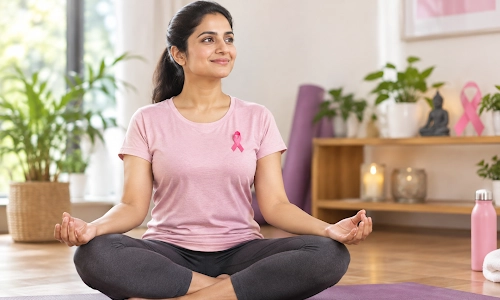
Yoga hasn’t been proven to prevent breast cancer on its own, and anyone who says it has is overselling it. What it does well is the other side of the picture. It eases stress, improves sleep and loosens the shoulders, neck and back. Studies on women who are in treatment or recovering from breast cancer have found that regular yoga can ease tiredness, anxiety and poor sleep.
Count yoga as gentle movement, then pair it with brisk walks or dance for the heart-pumping part.
5 Gentle Yoga Poses to Start With
If you’ve had breast surgery or radiation, or you’re in treatment, check with your doctor or physiotherapist before starting. Ask which arm and shoulder movements to avoid for now. Stop if anything pulls, burns or hurts.
1. Cat-Cow (Marjaryasana-Bitilasana)
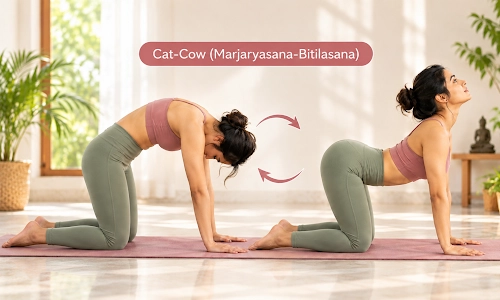
Come onto your hands and knees, with your wrists under your shoulders and your knees under your hips.. Breathe in, let your belly drop and lift your gaze. Breathe out, round your back and tuck your chin. Do eight slow rounds. It’s a relief for stiff backs and necks after long hours at a desk.
2. Seated Side Bend (Parsva Sukhasana)
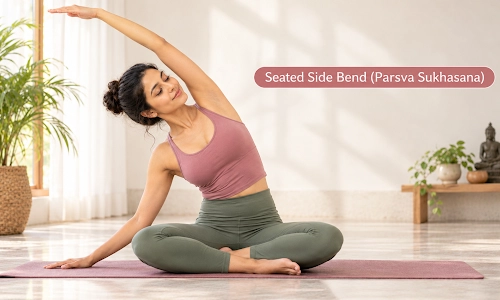
Sit cross-legged with your right palm on the floor beside you. Raise your left arm and lean to the right, keeping both sitting bones on the ground. Hold for five breaths, then switch sides. Keep the stretch light if your underarm or chest feels tight.
3. Shoulder Rolls and Neck Release
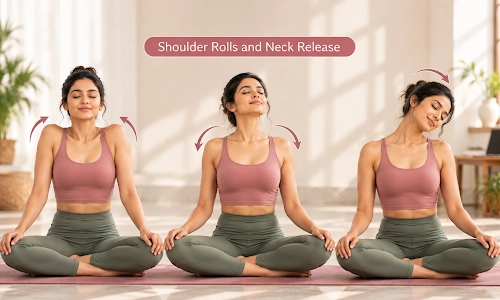
Sit tall and roll your shoulders up, back and down ten times, then reverse. Drop your right ear towards your right shoulder and breathe for five counts, then repeat on the left. You can do this at your desk between meetings.
4. Belly Breathing (Dirgha Pranayama)
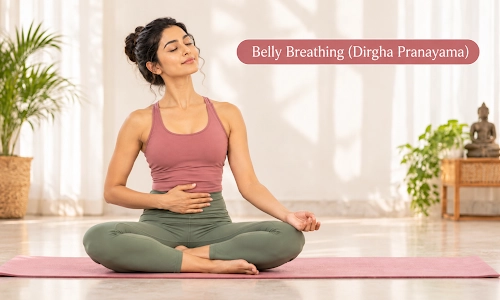
Sit or lie down comfortably with one hand on your belly. Breathe in through the nose for a count of four and feel your belly rise. Breathe out for a count of six. Carry on for two to five minutes. It’s a good way to wind down before bed.
5. Corpse Pose (Savasana)
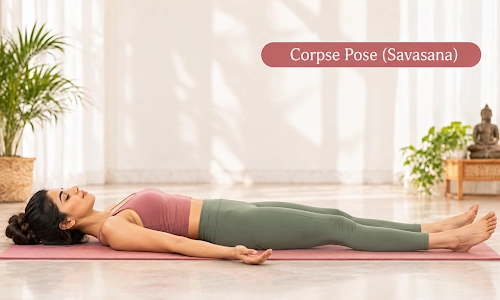
Lie on your back with your arms a little away from your body, palms facing up, and close your eyes. Let the floor hold your weight. Stay for five minutes at the end of your practice. This is where the stress actually drops, so don’t skip it.
What Should You Wear to Work Out?

A sports bra that fits properly. It should hold your breasts steady, sit flat without digging in, and let you breathe fully. When a bra bounces, pinches or rides up, you think about it through the whole workout, and that’s usually how a morning walk quietly gets cancelled.
A quick fit check:
- Band: snug and level all the way around. You should be able to slide two fingers underneath.
- Cups: your breasts sit inside without spilling over the top or the sides.
- Straps: they stay on your shoulders without leaving deep marks.
- Centre: the middle of the bra lies flat against your chest.
- Jump test: jump on the spot ten times. If anything shifts a lot, go for more support.
| Activity | Support level | What to look for |
| Yoga, stretching, slow walks | Low | Soft, stretchy, seamless fabric that’s comfortable in forward bends |
| Cycling, brisk walks, dance, Zumba | Medium | Firm band, wider straps, breathable fabric |
| Running, skipping, aerobics | High | Compression or well-shaped cups, adjustable straps, sweat-wicking fabric |
Change out of a sweaty bra soon after your workout, keep two or three in rotation so the elastic gets time to recover, and recheck your size every six to twelve months or after any change in weight. Shyaway’s bra size calculator takes two minutes, and the sportswear range is a good place to start once you know your size.
If you’ve had breast surgery: ask your surgeon or care team which bra is safe to wear and when to start. Many women find soft, wire-free, front-opening styles easiest during healing, but follow your doctor’s advice over anything you read online.
Know Your Breasts and Keep Your Check-Ups

Exercise is one half of the plan. The other half is noticing early. Get used to how your breasts normally look and feel, so a change stands out. See a doctor without waiting if you notice:
- A new lump or thickening in the breast or underarm
- A change in size or shape
- Dimpling, redness or puckered skin
- A nipple turning inward, or any discharge that isn’t breast milk
- Pain in one spot that doesn’t go away
Most breast lumps turn out to be harmless, but only a doctor can say so. Ask when screening should start for you, especially if breast cancer runs in your family.
Start with One Thing This Week
Pick one. Book the check-up you’ve been postponing, or block 30 minutes tomorrow for a walk. Then send this post to a woman in your life, because habits tend to stick when we start them together.
This article is for awareness only and isn’t medical advice. Please talk to your doctor about your own risk, screening and exercise plan.
Sources
- IARC / GLOBOCAN 2022 figures for India, as reported by Down To Earth
- World Cancer Research Fund, breast cancer statistics
- NIEHS, physical activity and breast cancer risk
- ASCO Post, American Cancer Society study on walking and breast cancer risk
- Facing Our Risk, exercise and breast cancer risk
FAQs
How much exercise do I need to lower my breast cancer risk?
Aim for 150 to 300 minutes of moderate activity a week, or 75 to 150 minutes of vigorous activity. A brisk 30-minute walk on five days gets you to 150. Doing less still helps, because the benefit grows gradually as you move more, so start with what you can manage.
Does walking reduce breast cancer risk?
It can. In a large American Cancer Society study of postmenopausal women, those who walked seven or more hours a week had about a 14 per cent lower risk than those who walked three hours or less. A brisk pace counts for more than a slow stroll.
Is yoga good for women with breast cancer?
Gentle yoga is widely used to ease stress, tiredness and poor sleep during and after treatment. Check with your doctor or physiotherapist first, especially after surgery or radiation, and skip any pose that pulls or hurts. Think of yoga as support, not as treatment.
Can I exercise during breast cancer treatment?
Many women can, in a lighter form. Short walks and gentle stretching are common starting points. Treatment can leave you very tired, so ask your care team what suits you in a given week, and rest when your body asks for it.
Does wearing a bra cause breast cancer?
No. There is no scientific evidence that bras, including underwired or snug ones, cause breast cancer. Choose a bra for fit and comfort, and get measured again if it leaves deep marks or feels painful.