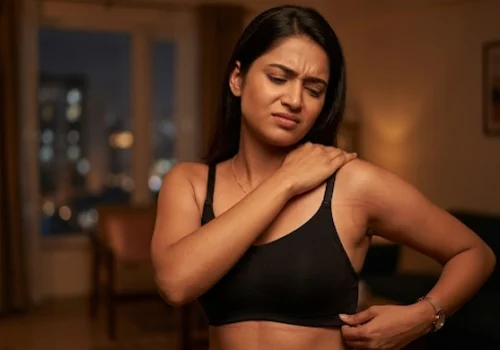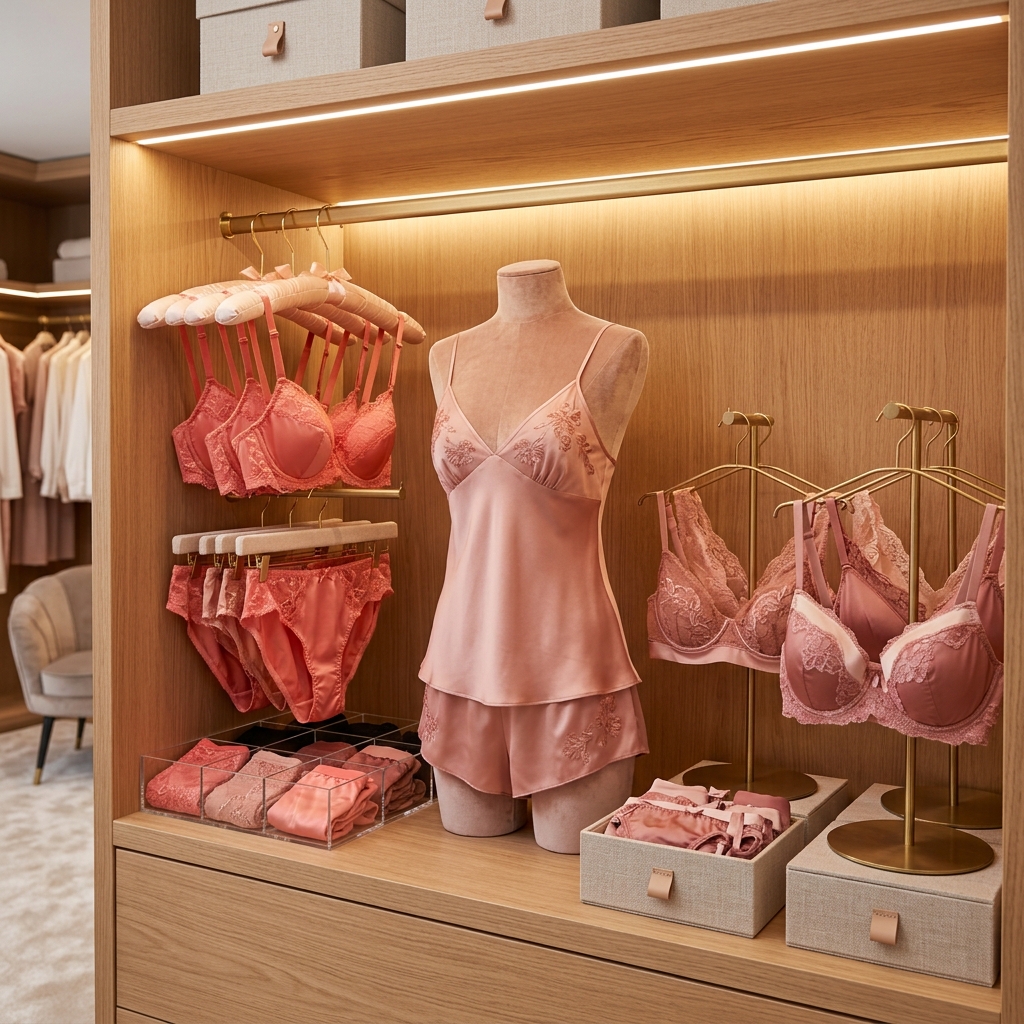
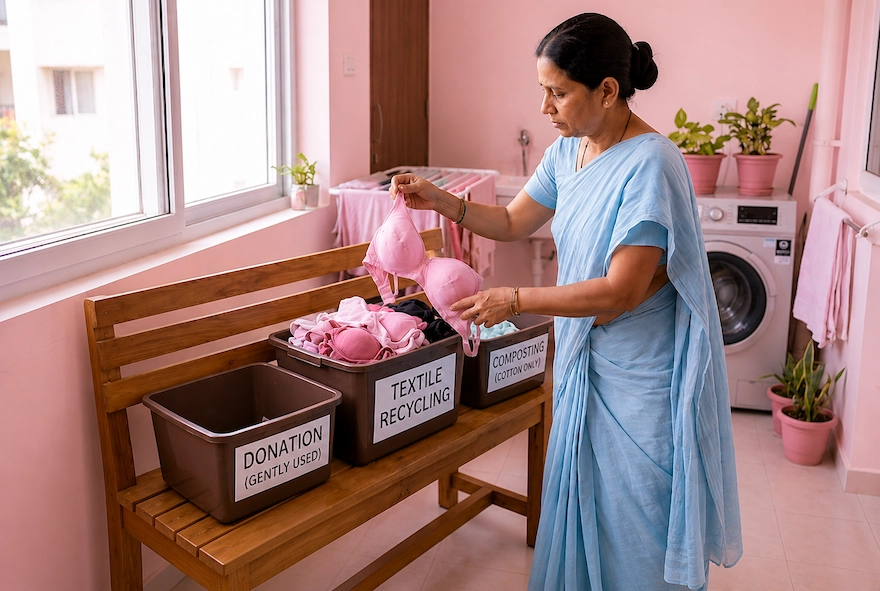
An unemptied drawer filled with stretched-out bras and panties with frayed elastics is a common sight in many households. What we usually do is to toss them into the dustbin. But have you ever wondered where they actually go?
In India, the typical lifecycle of old underwear ends abruptly in a trash can, leading straight to our already overflowing landfills.
As innerwear today is made from synthetic blends (think nylon, polyester and spandex for added stretch), they don’t just decompose. Instead, they sit in landfills for hundreds of years, polluting the environment. Every synthetic fabric tossed in the garbage breaks down into microplastics that seep into our soil and water systems.
To sustainably dispose of bras and underwear in India, donate rarely worn items to shelters, or resell them via Instagram thrift shops and brand take-backs. For worn-out innerwear, send fabrics to textile recyclers or upcycle them into creative home decors.
Donate Rarely Used Items
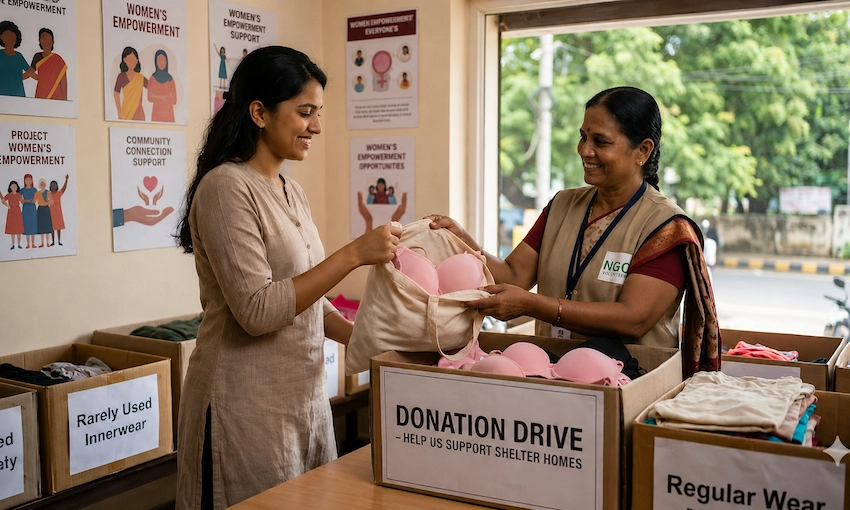
If you don’t know what to do with the unfit bra or panties which you recently bought, or innerwear that is barely worn, don’t throw it away just yet. Instead, you can donate them.
Consider donating them to local women’s shelters, disaster relief organizations, or specialised NGOs in your city. Many organisations accept gently used or new bras to support women from underprivileged backgrounds who may not have access to quality innerwear.
Reselling: A Second Life for Unworn items
It is common to buy the wrong bra size, realise that a style doesn’t fit properly, and end up with lingerie sitting unworn in your wardrobe. There are several ways to resell such items.
Instagram Thrift Shops:
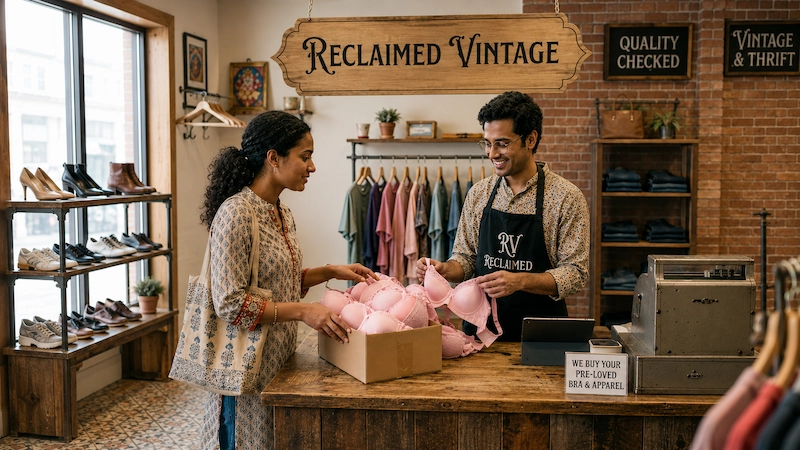
The internet thrifting community in India is rapidly growing. Digital thrift stores, particularly those on Instagram, are fantastic places to rehome high-quality, gently used, and thoroughly cleaned bras that deserve a second chance.
Brand Take-Back Programs:
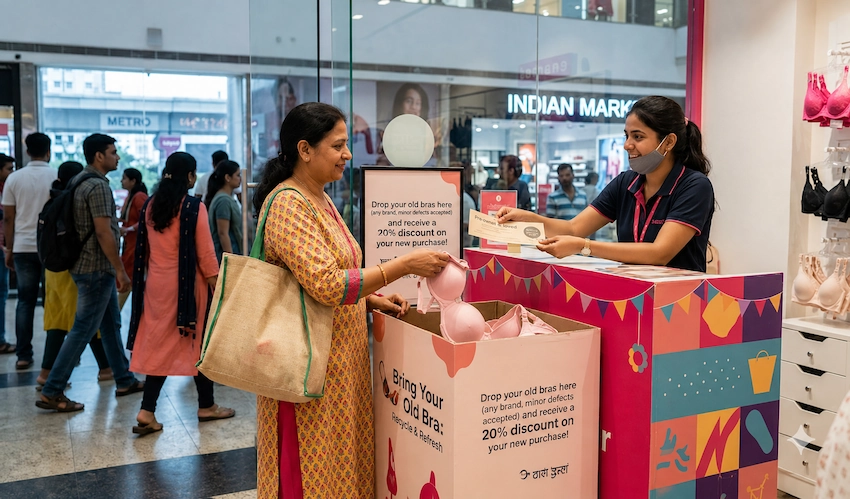
Many modern innerwear brands actively accept their previously sold products from their customers through take-back programmes in return for discounts on new purchases. Keep a look-out for sustainable initiatives like “Bring Your Old Bra” run by big lingerie companies. These programs often reward customers with store discounts or loyalty points.
Recycling: The Sustainable Option
Innerwear that is completely worn out, has lost its elasticity and cannot be donated should be recycled instead.
Textile recycling projects are actively managing fabric waste across India. For instance, Respun, which provides a clothes recycling service. It collects consumer fabric waste directly from individuals and shreds it down to their raw fibre level. These fibres are then treated and spun into fresh, high-quality home furnishings such as cosy rugs, mats and blankets.
Look for local textile recycling drives in your cities that collect old clothes for processing.
Creative Upcycling
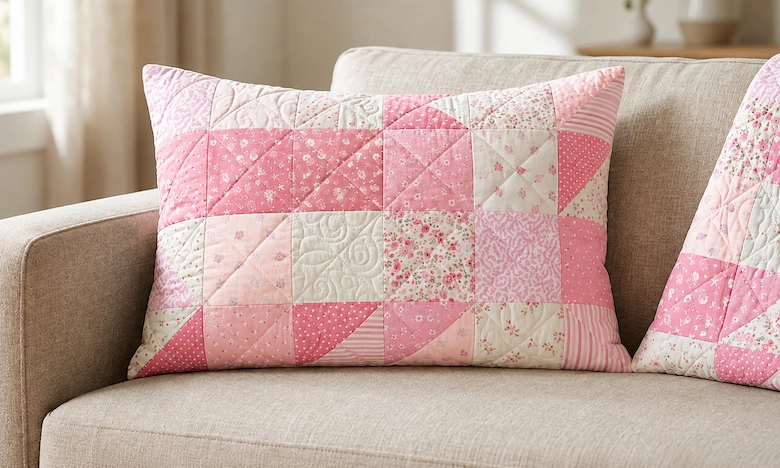
If you like crafts, the various parts of bras are quite reusable and can be kept out of the landfill with a little creativity.
Cupped Corsets: The cups from old underwired bras can be removed and utilised when making cupped corsets.
Quilt Patches: Cut old cotton panties or bralettes into squares, sanitise and use as patches for quirky DIY quilts and patchwork pillowcases.
DIY Home Decor: Soft fabrics can be cut and used as filling for homemade throw pillows, or cut into pieces and used as cleaning rags around the house.
Composting Natural Fabrics
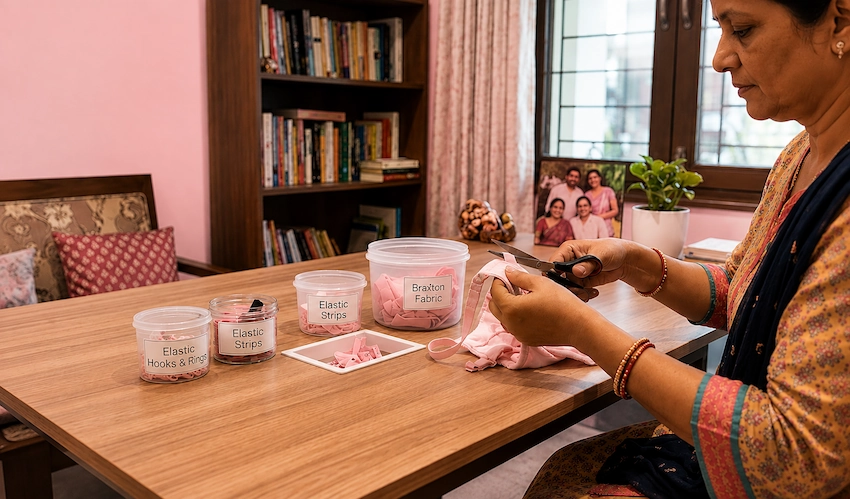
If the garment is made from 100% natural fibres, such as pure cotton or linen, it can decompose naturally over time.
Before disposing of a bra, remove all non-biodegradable components, such as elastic bands, plastic adjusters or sliders, synthetic tags, metal zippers and buttons.
Shred the fabric into fine, small pieces and put it in your compost bin. The smaller the pieces, the faster the soil microbes can break them down.
The Bottom Line
Therefore, to get rid of undergarments in India in a sustainable manner, we must move far from simply throwing them away. In a nutshell, donate what is wearable, give it a second life, recycle what is torn, and upcycle what remains. If there is even a single way to reduce landfill and make the world a better place to live, why not?