Most women don’t actually “shop” for underwear. We shop for the right kurta, the right foundation shade, the right pair of sandals. Underwear usually gets grabbed off a rack in a hurry, whatever fits the budget and looks decent enough.
But this is the one piece of clothing that stays on your skin the longest, every single day, for years. So it deserves a bit more thought than a two-minute decision at a store counter.
There’s no single underwear that suits every woman. But for most Indian women, most days, a soft, well-fitted pair in 100% cotton or a cotton blend with a cotton lining are the safest everyday picks. For workouts, travel days, or long hours outside, fabrics like micro modal, bamboo, or cotton-elastane blends work better because they dry faster in humid weather. Lace and synthetic pieces are perfectly fine for occasions – just not something to wear for twelve hours straight, every day.
Why Does This Actually Matter?
The skin around your intimate area is more delicate than most other parts of the body. It doesn’t have the same protective layer, and it stays in a warm, slightly enclosed environment through most of the day.
Now add Indian weather to that – humid summers, sweaty commutes, stepping in and out of AC rooms constantly. That combination is exactly why so many women deal with irritation, odour, or a general itchy discomfort at some point, even if it’s rarely spoken about openly.
Underwear that suits your body and the weather can help with:
- Keeping the area dry through the day
- Cutting down on that sweaty, trapped feeling by evening
- Reducing friction and chafing on the inner thighs
- Feeling comfortable during periods, workouts, pregnancy, or travel
- Simply not having to adjust or fidget all day
None of this needs to feel awkward to talk about. It’s just how the body works, and it deserves the same practical attention we give to skincare or diet.
What Does Research Actually Show?
There’s a lot of half-true information floating around about underwear and health. Here’s what more recent, credible research points to:
1. Fabric Isn’t the Only Factor – Fit Matters Just as Much
A study published by the NIH looked at close to 3,600 women and found no significant difference in bacterial vaginosis rates between those wearing nylon and those wearing cotton underwear.
What this tells us is that underwear that’s too tight or worn for too long can cause more trouble than the fabric type itself.
2. Breathable Synthetic Fabrics Aren’t Automatically Bad
A randomised controlled trial on breathable panty liners found no meaningful rise in infections or irritation over 75 days of regular use. So the old idea that anything non-cotton is harmful doesn’t fully hold up anymore.
3. Antimicrobial and Moisture-Managing Fabrics Genuinely Help
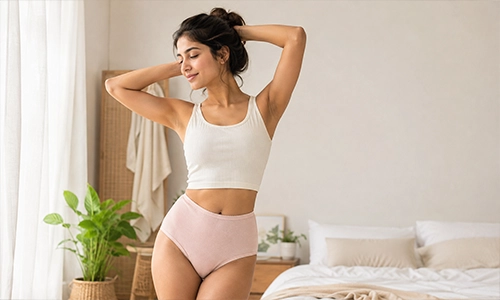
Newer research on antimicrobial underwear fabrics (think silver-treated or naturally antibacterial materials like bamboo) showed Improvements in symptoms like discharge, odour, and itching.
4. What Touches Your Skin Matters More than the Outer Fabric
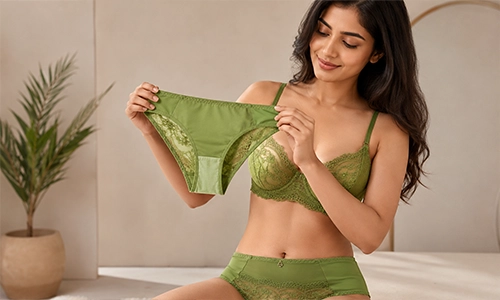
Even lace or mesh underwear usually has a separate lining at the base, called the gusset, which is what actually sits against your skin. This is why a lot of pretty, lacy underwear can still be safe for occasional wear – as long as that inner lining is breathable.
5. Diet, Hygiene, and Hormones Play a Bigger Role than Underwear Alone
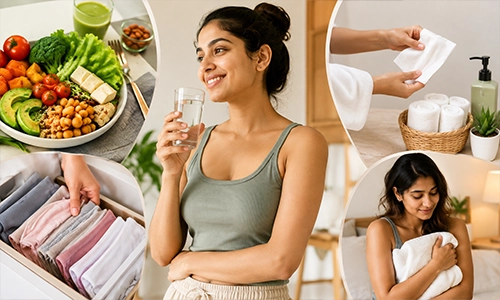
A broader NIH review of intimate hygiene notes that vaginal health depends on multiple factors together, not one single habit or clothing choice.
So the takeaway isn’t “cotton or nothing.” It’s that breathable fabric, good fit, and basic hygiene habits, like changing underwear daily, work together. No single factor does all the work.
Fabric Guide for Indian Weather
Cotton
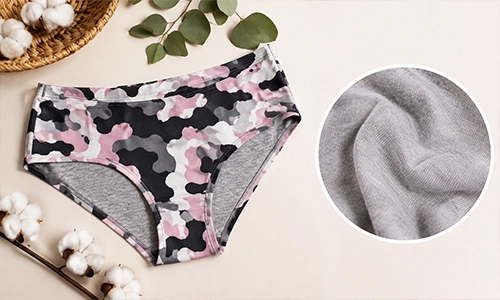
Still the most trusted option, and for good reason. Soft, breathable, absorbs sweat well, and gentle on sensitive skin. Works well for daily wear, sleep, and periods.
The one drawback is that in very humid weather, cotton holds on to moisture a bit longer, so it can feel slightly damp by the end of a long day.
Good for: everyday wear, sleep, periods, sensitive skin.
Modal and Micro Modal
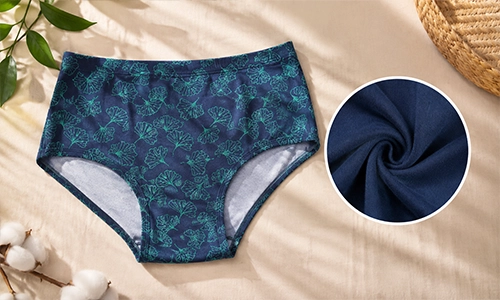
Made from beech wood pulp, modal panties feel noticeably softer than plain cotton and handle moisture a little better. A good middle ground if you want something more premium-feeling without giving up breathability.
Good for: office wear, everyday comfort with a softer feel.
Bamboo Fabric
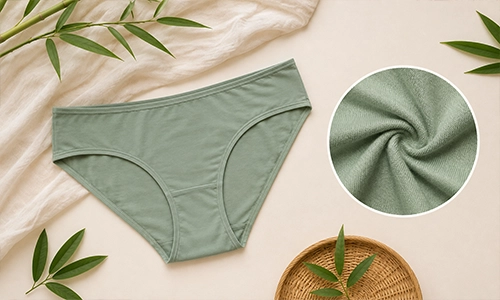
Naturally breathable and known for regulating temperature reasonably well. Popular over the last couple of years, particularly for sensitive skin and hot, sticky weather.
Good for: humid cities, sensitive skin, all-season use.
Cotton-Elastane Blends
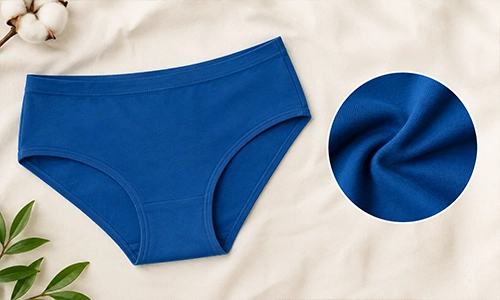
Cotton mixed with a small amount of stretch material so it moves with the body instead of digging in. You still get cotton’s breathability, but with a fit that holds up better over the day.
Good for: everyday wear, especially if plain cotton tends to sag or lose shape after a few washes.
Microfibre
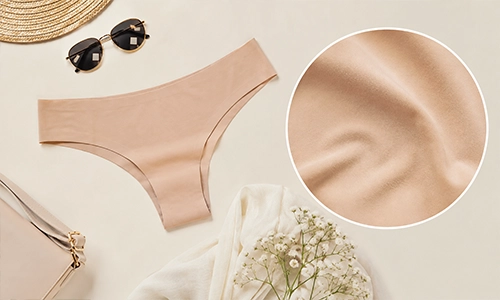
Thin, smooth, nearly invisible under fitted clothes like leggings or bodycon outfits. Less breathable than cotton, so it’s a better occasional choice than an everyday one, especially in peak summer.
Good for: fitted outfits, occasions, avoiding visible lines.
Lace and Synthetic Fabrics
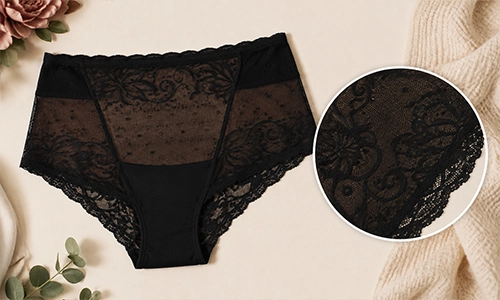
There’s nothing wrong with wearing lace. It looks good and that matters too. The concern is only with wearing it non-stop, day after day, for long hours. If lace is your thing, look for pieces with a cotton-lined gusset so you’re not compromising comfort where it counts.
Good for: occasions, date nights, festive wear – not all-day daily use.
Underwear Styles and When to Wear Them
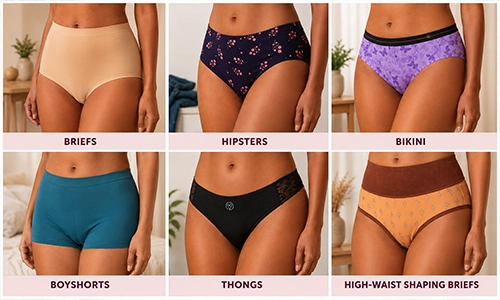
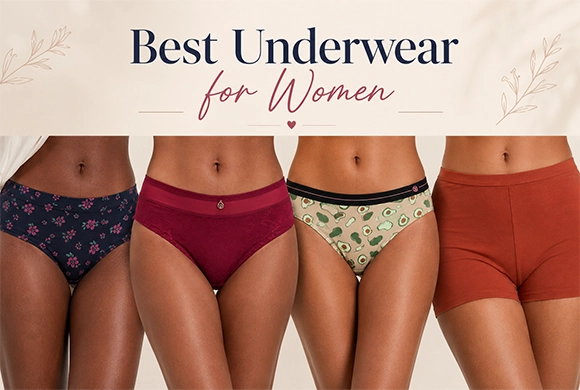
1. Briefs
They are full coverage, and are the most classic style. Comfortable for daily wear, periods, and lounging at home.
2. Hipsters
Hipster panties sit a bit lower than briefs, giving full coverage with a slightly more modern cut. Works well under jeans and mid-rise bottoms.
3. Bikini
They are lower-cut with moderate coverage. A nice balance for everyday wear under lighter clothing.
4. Boyshorts
Boyshorts are longer in the leg, which helps reduce inner-thigh chafing, something a lot of women deal with in summer or while wearing sarees for long hours. Also a comfortable option for sleep.
5. Thongs
They offer minimal coverage, mainly to avoid visible lines under fitted clothing like bodycon dresses or sarees with a snug petticoat and are not meant for all-day, everyday wear.
6. High-Waist Shaping Briefs
They sit above the natural waist and smooth the tummy area slightly, which is a common choice under sarees, lehengas, and fitted western outfits.
A Simple Way to Decide
Instead of overanalysing it, a few quick questions usually help:
What’s the Weather Like Where You Are?
Humid cities like Chennai, Mumbai, or Kochi call for quicker-drying fabrics like bamboo or cotton blends. Drier regions like Delhi or parts of Rajasthan do fine with cotton through most of the year.
What Are You Wearing That Day?
Fitted outfits need seamless styles or a thong. Sarees and lehengas pair well with high-waist briefs. Regular days call for a simple cotton brief or bikini.
What Are You Doing That Day?
Gym or travel days do better with moisture-wicking fabric. Office or regular days work fine with cotton or a cotton blend. At night, loose cotton works well, or going without any underwear at all is completely fine too, and is even something many doctors suggest for extra breathability.
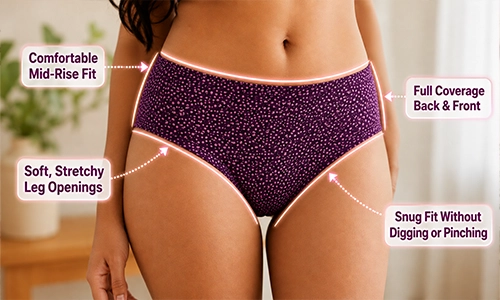
How does it actually fit? If it leaves marks, it’s too tight. If it bunches up or shifts, it’s too loose. If you’re adjusting it every hour, the size is off and it’s not for you.
The Bottom Line
There’s no single “best” underwear that works for every woman on every single day. That’s not really a bad thing, though. It means most women end up with a small mix in their drawer: a few reliable cotton pairs for daily wear, something moisture-wicking for workouts or travel, a seamless option for fitted outfits, and a few pretty pieces for when you just want to feel good in what you’re wearing.
The real point isn’t finding one perfect pair for life. It’s paying attention to how your body actually feels through the day and picking fabric and fit that respect that, the same way you’d think through any other part of your routine.
Comfort shouldn’t be something you settle on. Not for style, not for price, not out of habit.
Shop Featured Panties
-
 Buy 3 For 899
 -
 New ArrivalBuy 3 For 899
 -
 Buy 3 For 899
 -
 Buy 3 For 899
 -
 New ArrivalBuy 3 For 899
 -
 Buy 3 For 499
FAQs
Is cotton really the best fabric for underwear?
Most days, yes. It's soft, it breathes, and it doesn't irritate the skin. But don't write off bamboo or a good cotton blend just because it's not "pure" cotton. In really humid weather, those actually dry off quicker than cotton does, so calling one strictly better than the other isn't quite fair.
Can wearing the wrong underwear cause infections?
It's not that simple. Underwear that traps heat and sweat for hours definitely doesn't help, but on its own it's rarely the whole story. What you eat, how often you change, hormonal shifts, all of that plays a part too. Wearing breathable fabric and swapping underwear daily just tilts the odds in your favour.
Can I still wear lace or synthetic underwear?
Go for it. There's no need to give up on the pretty stuff entirely. Just don't make it your daily, twelve-hours-a-day underwear. Save it for evenings out, dates, special occasions, whatever the reason is that you own it in the first place.
How often should I actually replace my underwear?
Somewhere around six months to a year is the general rule. Sooner if the elastic's gone loose or if you keep getting irritation for no obvious reason.
Should I sleep without underwear?
Many women do, and it's fine, it gives the area a break overnight. If that's not something you're used to, sleeping in a loose cotton pair works just as well.
What underwear is best during periods?
Cotton briefs with full coverage or period-proof underwear, if you use those, tend to keep pads in place better and just feel more secure, especially on the heavier days.
What's the best option for Indian summers?
Cotton or a cotton-elastane mix, and keep it a bit loose rather than snug. That combination handles the heat and stickiness better than most other options.