
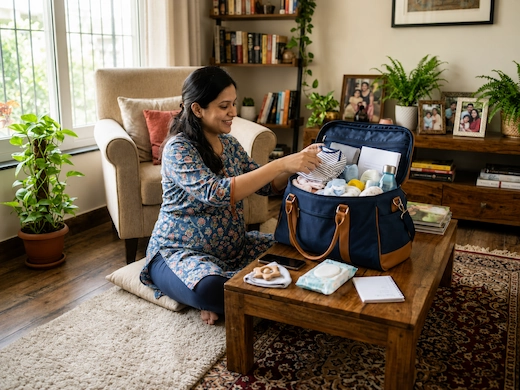
Childbirth is an extremely important moment in someone’s life, requiring great care and attention for both the mother and the newborn. Preparing your hospital bag checklist in advance can make things less complicated and more organised as you begin this new chapter. The first and foremost thing is to organise your bag for the hospital with everything you might need throughout the process and in the post-delivery period.
As you are likely to stay there for at least 24 hours or longer, depending on whether it will be vaginal or caesarean delivery, one should consider preparing for this in advance. Although hospitals provide basic necessities, thinking about yourself is important.
When to Prepare the Bag
Due dates are never certain! In reality, research reveals that only around 5% of babies are delivered on their scheduled birth date. The majority of childbirths are typically a few weeks ahead of or behind schedule. It is advisable to be prepared at all times by packing your hospital bag before your due date, preferably at the 36th week of pregnancy.
Hospital Facilities Availability
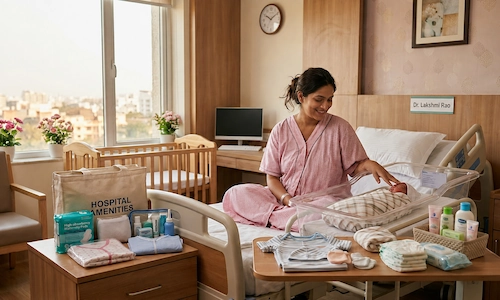
Most hospitals offer basic needs for both the expecting mother and the newborn baby. By the time you give birth, you will likely have read various packing guides, but keep in mind that you do not need to pack everything. Concentrate on the essentials and what will make you more comfortable.
Essentials usually offered to the mother:
- Hospital gowns that open from the front
- Sanitary pads with high-absorbency power
- Mesh undergarments that are disposable
- Toiletries such as soap, shampoo, and toothpaste
- Peri bottles
- Pillows and bedspreads
Essentials usually offered to the baby:
- Washed clothes that fit newborn babies
- Swaddling cloths made from flannel
- Diapers and wipes
- Bathing products for the baby
Items for the Mother to Carry

Even though hospitals usually offer basic needs, carrying some items from home can make your stay in hospital comfortable. In order to know which items are not provided by the hospital, you should enquire before going to the hospital.
Here is a brief checklist of essentials:
Proof of identification: One of the important things to carry along is your identification document. An ID will help when you go through the admission process at the hospital.
List of medications: Your doctor or nurse would want to know whether you are taking any medications while you are pregnant.
Money and credit/debit cards: Besides your credit/debit cards, having some money in hand will help with a quick buy from the vending machines or hospital cafeteria.
Non-skid socks or slippers: Just in case, if you hate those hospital socks; you can bring a pair of your own non-skid socks or slippers. Remember, anything you decide to use must have grips to ensure your safety.
Birth playlist: This could be songs or meditations. It includes any other form of sound you would prefer playing through your pregnancy process.
A book or a magazine: You can read if you end up spending some time waiting before the big day arrives.
Mobile Phone and charger: As things may take more or less time than expected, you should have something to keep yourself busy with, such as making a call during emergencies.
Toiletries: You can have some travel-size toiletries such as shampoo, deodorant, brush, toothpaste or toothbrush and a bar of soap.
Pillow: Do you have a favourite pillow that you always use? Carry your favourite pillow along with a unique coloured pillowcase.
Flip-Flops: You may wonder whether the hospitals clean their floors often. But then again, why not carry flip flops with you?
Intimates
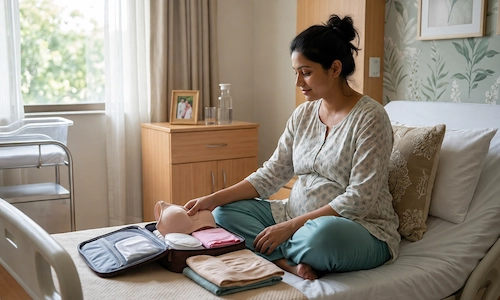
Underwear: The mesh underwear provided by the hospital may well be the only solution you need to cope with postpartum bleeding in the first few days following childbirth. Later, it would be more comfortable to switch to your own underwear, preferably a period panty or full coverage panty to hold large and wide sanitary pads.
Pads: The hospital offers bulky pads. In case you prefer thinner pads, bring them from home. It is not advisable to use tampons after delivery.
Nursing bra or supportive bra: You will surely experience milk discharge within the next hours and days regardless of whether or not you intend to breastfeed. This is why a supportive bra is a must-have. A nursing bra will make the process of breastfeeding the baby easier for you.
Breastfeeding cover and nursing pads or pillow: Are you expecting any visitors? Then a breastfeeding cover may seem a good choice. You may also need nursing pads or a pillow.
Breast pump and other nursing items: You do not necessarily have to buy a breast pump unless you intend to breastfeed exclusively.
Comfy clothing: There are some women who spend the whole time in the hospital in the same hospital gown. This is okay. But if you want to change into comfortable clothes, go for it.
Supportive undergarments: It could be helpful to pack some C-section undergarments that fit well around the stomach due to their high waist and mild compression. Otherwise, some fold-over underwear that sits underneath the incision line could be useful.
Loose clothes: There are times when women prefer to wear clothing over other things like pants due to how loose they are and don’t irritate the incision.
Baby Bag Essentials

There won’t be much that you need to bring for your baby’s stay in the hospital. Some delivery units require that newborns wear hospital-branded clothing until discharge to avoid confusion.
Homecoming outfits: While this isn’t the first thing that your newborn will need, it could be among the most important items. Pick a cute baby outfit that you would love to see your baby wear at home. Consider the weather when packing.
Diapers and wipes: In case you have some definite diapers to try out, grab a pack of them and carry them along. If you plan to start right off with cloth diapering, carry along some newborn cloth diapers and a wet bag.
Swaddles or receiving blankets: You might want a couple of your own swaddles to swaddle the baby in and get comfortable wrapping your baby before you go solo in the following days.
Mittens, booties, hat: In case your newborn has very long nails and is prone to scratching themselves, you might want to carry some mittens along with you.
Things Your Caretaker Can Bring With You

It is easy to forget about the caretaker while preparing a list for oneself. However, your partner should be well-equipped to deal with being around you two in the hospital.
Comfortable clothes: In case you need to stay more than a day in hospital, your partner should come prepared with comfortable clothes, like a couple of pajamas.
Toiletries: Though the bare necessities will be supplied to you, this courtesy may not be extended to other people. Your partner must remember to pack toiletries such as shampoo, face wash, lotion, deodorant, toothbrush and toothpaste.
Pillow and blanket: The hospital supplies are not really the comfiest. Once again, your partner should decide to pack their own pillow, it is advisable that they pack it in a bright coloured pillowcase for distinction from hospital supplies.
Water bottle: Though you will assume responsibility for your water cup, you might need another one as a precautionary measure.
Items That Should Not Be Included in the Hospital Bag
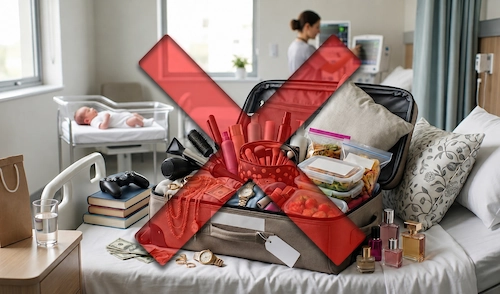
As much as one would wish to carry all items used in everyday life, overloading will make it hard to access required items. Hospitals have limited spaces. Some of the items that should not be packed include:
Expensive items: There is a possibility of losing them during the hospitalisation period.
Many clothes for babies: A couple of outfits should suffice because babies will most likely wear hospital attire on the first day of birth.
Hair products and beauty equipment: New mothers do not necessarily use these products while staying at the hospital.
Many books and games: The hospital bag should contain a maximum of two types of games and entertainment materials.
Extra-large pillows or beddings kits: Hospital beds come equipped with basic beddings. The problem with bringing extra is that it will make you carry extra load unless it is recommended by the hospital staff.
Unapproved foods: Not all hospitals allow any type of food brought from home. Ensure you do not bring any food until you consult with the hospital officials first.
Fragrances or perfumes: Such scents might not be appropriate for new babies or shared rooms.
Final Note
Getting ready in advance allows you to focus on the important details of your delivery day. It is better to ensure that everything necessary for you and your baby will be available when you need them.
Ultimately, what you choose to bring with you to the hospital is entirely up to you. Why don’t you try making your own list?