

Choosing between a nursing bra vs regular bra is one of the major wardrobe decisions that new parents face. While your favourite underwire might have served you well for years, your body undergoes significant changes during pregnancy and postpartum that require specialised support.
The differences go far beyond aesthetics, ranging from the convenience of one-handed nursing clips to the unrestricted freedom of movement that adjusts to the natural fluctuations of lactation. In this blog, let’s unpack the structural variations, comfort levels, and transitions clearly, assisting you in making a choice of style that extends maximum support for your nursing chapter.
What Is a Regular Bra and a Nursing Bra?
A regular bra is a day-to-day intimate garment intended to serve the needs of comfort, support and shaping of the breasts according to standard bra styles such as padding and wires. On the other hand, a nursing bra is a special bra designed specifically for breastfeeding women that utilises designs such as drop-down cups or front-opening cups, allowing for unhindered feeding without removing the bra.
Regular Bra vs. Nursing Bra
| Features | Regular Bra | Nursing Bra |
| Key Function | Everyday structural support | Comfortable for feeding |
| Cup Design | Fixed | Front-open panels or Drop-down clips |
| Type of Support | Usually metal underwires | Soft flexible wires or sometimes wireless |
| Fabric | Lace, satin or synthetic | 4-way stretch cotton fabric |
| Shoulder Straps | Sleek and fancy | Broad and cushioned for extra support |
| Back Closures | 2-3 rows of hooks | 4-6 rows for changes in rib cage |
| Internal Fit and Design | Standard cup structure | Side shaper panels to keep the breasts in place |
| Health Focus | Silhouette and breast support | Supports free milk flow |

Why Does Your Bra Need to Change During Pregnancy and Feeding?
You need to upgrade your bra because your body adapts to physiological alterations that a traditional bra is out of its scope to handle. Here is the breakdown:
- Breasts can gain significant weight and grow several cup sizes. Nursing bras have wide straps and bands to balance the load and spread the pressure evenly across the back, alleviating the pain.
- Your rib cage broadens to hold the baby during pregnancy. Specialised bras highlight extra hook-and-eye closures to maintain comfort and adapt to the changing shape of the body.
- Standard underwires can compress developing milk ducts. Switching to a flexible, often wire-free nursing bra helps prevent blocked ducts and mastitis.
- Your size changes throughout the day as breasts fill and empty. Nursing bras use stretchy, breathable fabrics that adapt to these hourly shifts without pinching.
- Nursing bras come with one-handed clips or front-open panels, enabling you to feed your baby quietly and cautiously while remaining dressed.
Features of Nursing Bras
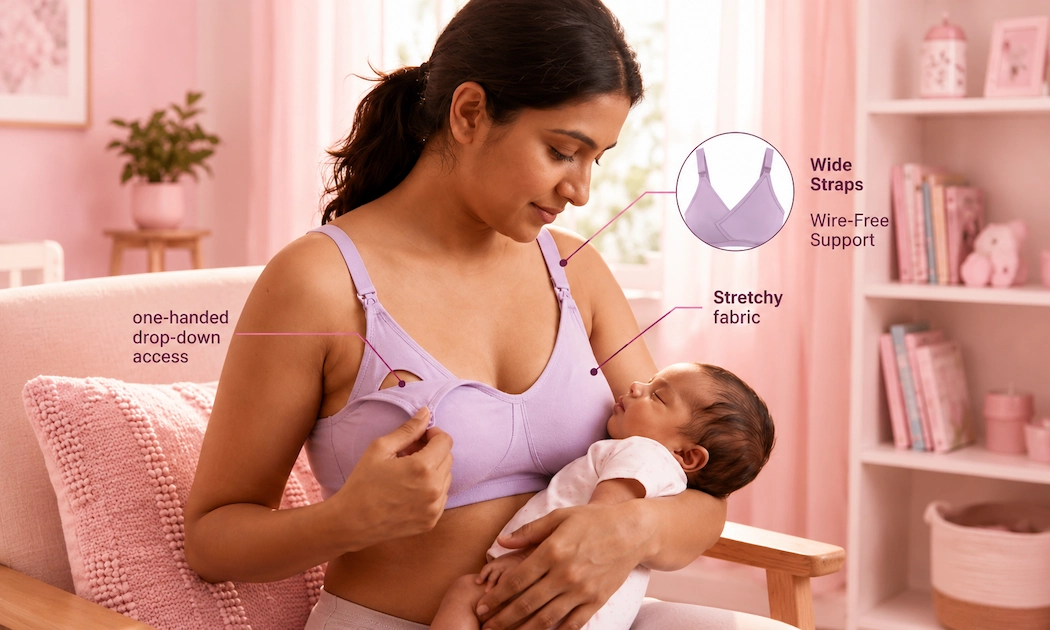
A Nursing bra prioritises the top three elements: comfort, access and flexibility. Here are the highlighted core functions:
Front-Open Panels: Snap buttons at the cups that make drop down easy, one-handed access while holding your baby.
Wire-Free Support: Mostly wireless to keep pressure off the milk ducts that helps in eliminating blockages or mastitis.
Stretchy Fabric: They use breathable and elastic fabric such as cotton and spandex, which are helpful in dealing with breasts that expand and contract as the day progresses.
Additional Back Hooks: These usually feature 4-6 hooking systems to help you cope as the ribs expand due to pregnancy and stabilise afterward.
Wide Straps: Due to the increased weight resulting from the development of lactating breasts, nursing bras are fitted with wider straps.
When Do You Need to Switch to a Nursing Bra?

The best time to switch to a nursing bra is during your third trimester, specifically around week 36. By now, you have stabilised in terms of growth and thus can forecast your body measurements after childbirth.
However, you should switch immediately if you experience:
Physical discomfort: Your regular bra feels tight, leaves red marks, or causes spilling.
Rib cage expansion: You have reached the last hook on your current bra and still feel restricted.
Sensitivity: When your usual bra, especially the one made of metal wires, causes irritation to your breast area.
Quick tip: During the first few weeks after delivery, use seamless stretch nursing bras since your breasts will undergo sudden changes once your milk supply becomes stable.
Shop Featured Bras
-
 New ArrivalFlat 40% OffFlat 40% Off
 -
 Flat 40% OffFlat 40% Off
 -
 Flat 40% OffFlat 40% Off
Final Note
In conclusion, while the regular bra caters to everyday purposes, a nursing bra is vital during the breastfeeding stage. The nursing bra prioritises your health since it avoids any blockage in the milk ducts, comfort due to the fabric that can easily fit your physique, and convenience due to nursing clips.
The change of wearing a nursing bra during the third trimester prepares you physically and mentally for the upcoming delivery!