Growing up and reaching puberty is a key turning point in one’s life, but it may be confusing at times. Give yourself time to understand your body as it grows. Meanwhile, being confused on this stage of life is pretty normal so there is no need to panic.
Buying your first bra can feel colossal, almost like trying to find your way blindfolded.
You might be wondering: Which size am I looking for? Where to Buy? Am I even ready for this? Which style works best? The list of questions may seem never-ending. On this blog, we do our best to solve as many of your queries as possible!
When to Start Wearing a Bra
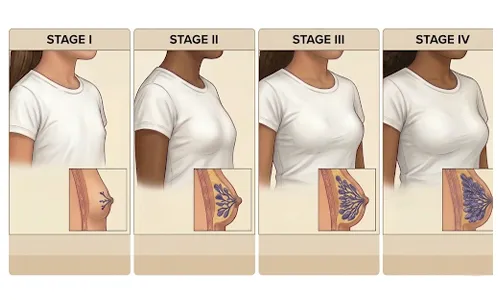
From the age of 9, girls begin to notice the first physical signs of puberty, starting with breast budding. During this stage, small, firm lumps form under the nipple, and the areola (the darker circle surrounding the nipple) often becomes larger and more prominent. This stage is known as breast budding.
As development progresses over several months or years, you may notice the following changes:
Growth and Shape: Breasts gradually become rounder and fuller. You may notice visible development in them.
Physical Sensation: It is very common to feel mild tenderness or sensitivity, particularly during exercise, when wearing tight clothes, or right before a menstrual period.
Asymmetry: While in the developing stage, you may notice uneven breast growth. One may appear bigger than the other. It is completely normal for one breast to grow faster than the other. This temporary unevenness usually evens out as development continues in further years.
However, everyone develops at their own pace—some may start much earlier, while others start later.
As your body changes, you might feel self-conscious if simple camisoles no longer provide enough protection and coverage, and you may feel physical discomfort during movement and exercise. If you feel like you need extra support and coverage, it is likely time to consider wearing a bra to feel at ease and confident.
It is important to remember that there is no “correct” age to start. The right time depends entirely on your unique body and when you feel ready for the transition.
How to Choose One
Before you buy your first bra, there are a few things you should know.
- Style & Designs
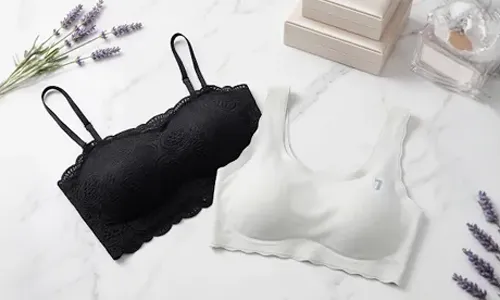
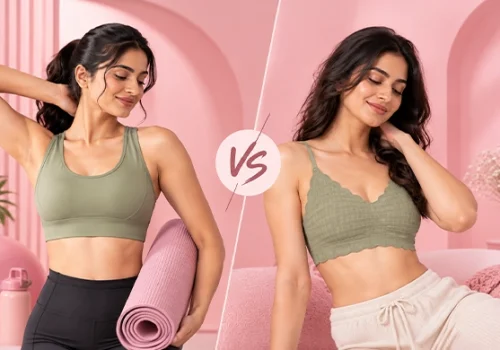
While you might think bras are for only adults. There are actually styles specifically designed for teenagers and first-time users. If you aren’t ready for traditional back hooks, options like bralettes, camisole bras and slip-on styles are great alternatives. Also, if you are an active person, consider a sports bra for physical activities.
- Bra Size
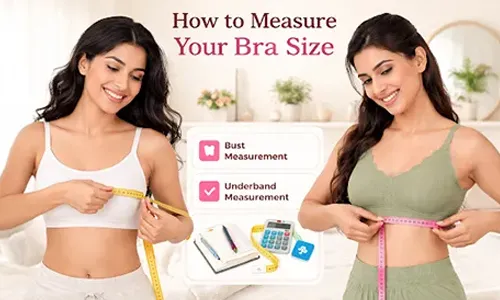
These days brands have their own online bra calculators to make it simple to find the ideal fit. Make sure you have your bust and underband measurements ready (in centimetres or inches) before you check your bra size. These are the key numbers needed to calculate your accurate size.
- Padding and Wiring
When choosing your first bra, it should be super convenient and easy on skin. Make sure you choose such bras. Lightly padded bras or non-padded bras, as well as built-in camis and moulded types, are great convenient choices for everyday wear. For beginners, it is advised to avoid wired and heavily padded bras until your body has easily adjusted to the transition.
- Fine Fabrics
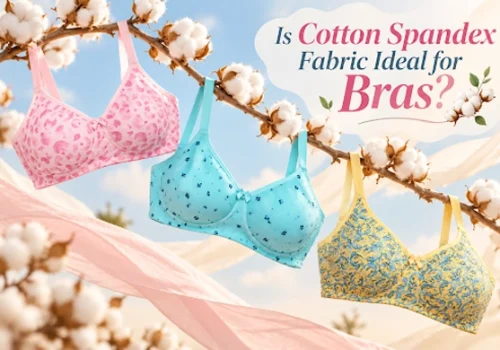
When prioritising comfort, it is better to go for bras which are crafted from a soft cotton-spandex blend that is gentle on sensitive skin. The breathable fabric ensures you remain irritation-free even in this summer, making it the perfect choice for continuous wear during school hours.
- Colour Choices
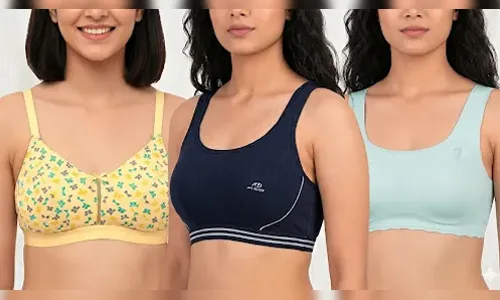
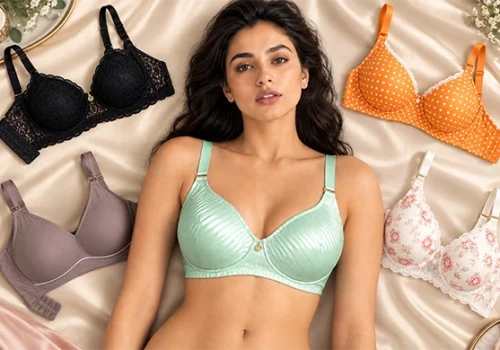
At least one dark neutral (preferably black for universal styling) and one light colour choice to pair with sheer fabrics. To complete your necessities, add some pop of colour pieces—even in your sports bras—to bring flair and variation to your outfit.
Fit Check
When trying on a bra, make sure it fits properly. To select the perfect size, consider these simple criteria:
- Straps should stay in place without digging.
- The underband sits right around your body.
- Cups fully wrap your breasts without pushing or gaping.
- You should feel free to move without adjusting the bra.
Note: Make sure your bra ticks off the above requirement.
How to Wash Your Bra?
- Hand wash with mild detergent.
- Try to avoid bleach or aggressive detergents.
- Instead of wringing, gently squeeze the water out.
- Do not line dry in direct sunshine. To retain the fabric’s colour and softness, dry it in the shade.
- To prevent snags, clip the hooks before washing.
- Wash after every 3–4 wears. If you sweat heavily, it is advised to wash after every use.
Parental Guidance
As daughters go through the transition into their teenage years, it’s an emotional shift for parents, too. It’s completely normal for teens to feel hesitant about discussing their changing bodies, so it is essential to create a safe, open space where they feel comfortable sharing. When they come to you with complaints, listen to them and reassure them that these changes are a natural part of growing up that everyone experiences.
Every girl’s journey is unique; some may develop breasts quickly while others take more time. At this age, they might experience body shaming and insecurity issues. Teenage is a time where body image is a major source of insecurity, and what they need most is a supportive adult who validates their feelings.
A little bit of validation goes a long way in helping them feel confident and supported in their own skin.
The End Line
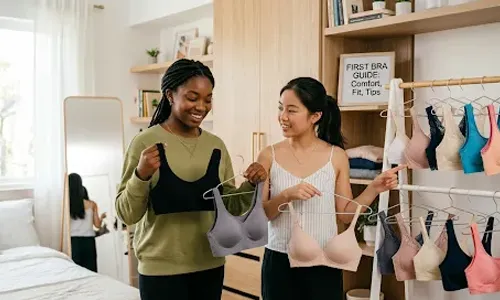
I hope this blog gives you a better idea of how to shop for your first bra. However, it is important to remember that every woman has been exactly where you are now. Wearing a bra or talking about one isn’t awkward—it’s simply a part of choosing clothes that help you feel comfortable and supported in your daily routine.