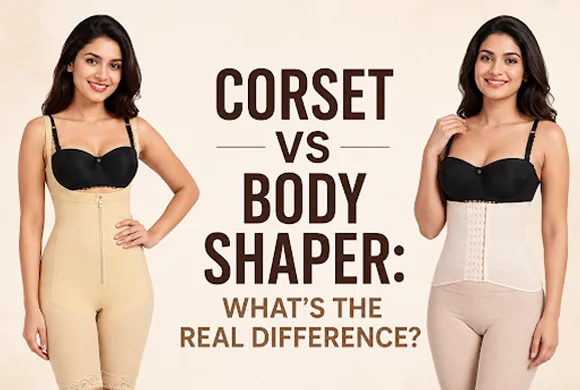
We’ve all stood in front of the mirror, tugging at a dress that just won’t sit right, wondering if the problem is the outfit or us. It’s neither — clothes are cut for a shape, and most bodies have their own opinion on what shape they want that day. So you Google “corset vs body shaper,” hoping for a simple answer.
A corset is a rigid, boned garment (originally worn to dramatically reshape the waist, sometimes worn as an outer top today) that cinches the waist tightly using laces or hooks. A body shaper is a stretchable, seamless undergarment made from fabrics like nylon-spandex that smooths and shapes the whole torso — waist, tummy, back, and hips — without restricting movement or breathing. Corsets create a dramatic hourglass effect but can be uncomfortable for daily wear; body shapers give a natural, comfortable silhouette that works under everyday clothing. For most women, a body shaper is the more practical, wearable choice.
Still with us? Good, because the real answer depends on your body, your outfit, and honestly, your patience level for discomfort. Let’s break it down properly.
What Exactly Is a Corset?
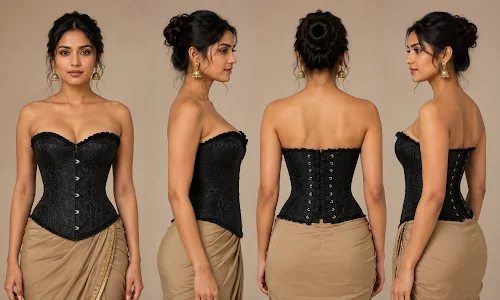
A corset is a structured, close-fitting undergarment (or outerwear piece, depending on the style) built around vertical boning — strips of steel, plastic, or fabric-covered stiffening that hold the garment’s shape. It’s laced up the back or fastened with hook-and-eye closures at the front, and it’s designed to do one job: pull the waist in as much as possible while pushing the bust up and the hips out.
Corsets have been around for centuries, and they’ve had quite the reputation ride — from Victorian-era waist training to today’s “corset top” trend you’ll spot on Instagram styled over jeans. Modern corsets fall into a few categories:
Overbust corsets – cover the bust and cinch from underarm to hip
Underbust corsets – start below the bust and shape the waist and midsection
Waist cinchers – a shorter version focused purely on the waist
Fashion corsets – worn as visible outerwear rather than underneath clothing
The defining feature of any real corset is the boning. Without it, you’re just wearing a very structured top — not an actual corset.
What a Corset Is Good At
- Creating a dramatic, sharply defined hourglass shape
- Working well as a statement piece with skirts, blazers, or gowns
- Giving posture support for short bursts of time
Where Corsets Fall Short
- They’re rigid, so they don’t move with your body
- Prolonged tight-lacing can restrict breathing and digestion, and make sitting for long periods genuinely uncomfortable
- They usually need a break-in period and adjusting to fit correctly
- Not built for daily wear, workwear, or anything involving a full day on your feet
What Exactly Is a Body Shaper?
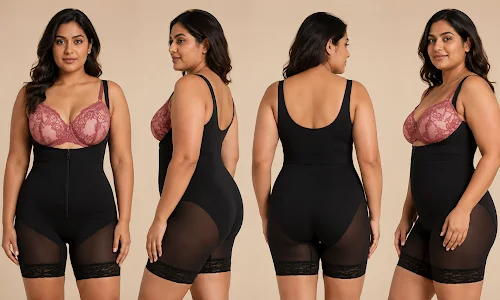
A body shaper (also called shapewear) is a stretch garment made to smooth, support, and gently shape the body without any rigid boning. Instead of forcing your shape into something new, it works with your natural shape — compressing softly in the right places and letting you actually breathe, sit, eat lunch, and move your arms above your head without a fight.
Most quality body shapers, including the ones you’ll find on Shyaway, are made from a nylon-spandex blend, which gives that stretch-and-recover quality — it moves with your body through the day and bounces back to shape instead of sagging or rolling.
Here’s what a well-made body shaper typically brings to the table:
- Full-body coverage — smooths the tummy, waist, back, and hips together for one streamlined shape, rather than just targeting one area
- Front zip closure — makes it far easier to get in and out of compared to hook-and-eye corsets, which is a genuinely underrated feature if you’ve ever fought with a garment in a dressing room
- Four-way stretch fabric — moves with you instead of restricting you
- Seamless finish — sits invisibly under fitted dresses, sarees, and body-con outfits without visible panty lines or bulges
- Breathable, all-day comfort — designed to be worn for hours, not just for an event
- Inclusive sizing — good shapewear brands design specifically for plus-size bodies, not just adapt a small-size pattern
What a Body Shaper Is Good At
- Everyday wear under work clothes, dresses, fitted outfits, and even when paired with supportive T-shirt bras, minimizer bras for a polished silhouette.
- Giving a smooth, natural-looking silhouette rather than an obviously ‘cinched’ one
- Comfort for long hours — sitting at a desk, travelling, or dancing at a wedding without needing a breather
- Supporting posture gently, without digging in
Where Body Shapers Fall Short
- They won’t dramatically shrink your waist the way a tightly-laced corset can
- The shaping effect is subtler — great for smoothing, not for costume-level drama
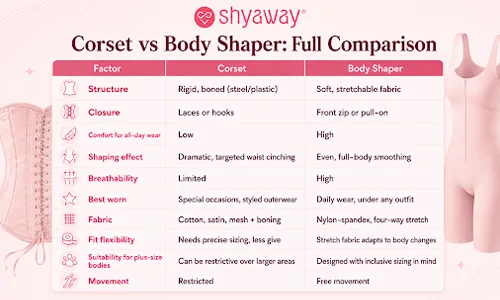
Corset vs Body Shaper: Full Comparison
Corsets and body shapers both promise the same thing — a smoother silhouette — but they go about it in completely different ways. One works by force, the other by design. This guide breaks down what each one actually does, where they overlap, and which one deserves a spot in your everyday wardrobe versus your closet’s ‘special occasion’ shelf.”
Where Corsets and Body Shapers Actually Agree
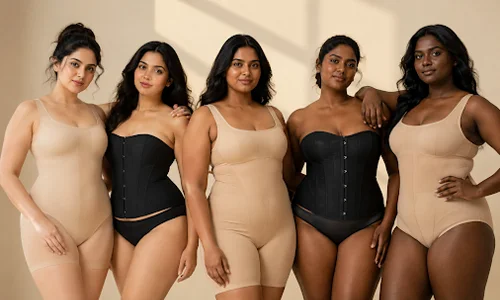
For all their differences, they’re solving the same basic problem, and it helps to remember that before you assume one is “better” than the other in every situation.
- Both aim to create a smoother, more defined silhouette under clothing or as a style statement
- Both provide some level of core and posture support
- Both come in various sizes designed to fit different body types
- Both can boost confidence in the right outfit — that’s really the whole point of either garment
- Both work best when you pick the correct size — a size that’s too small in either category causes discomfort, and one that’s too loose won’t shape anything
What to Look for When Buying a Body Shaper
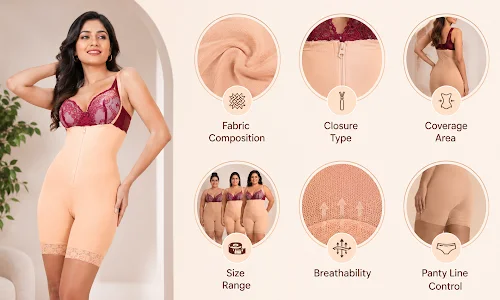
If you’re leaning toward shapewear (and honestly, most people should), here’s what actually matters when you’re choosing one:
- Fabric composition — nylon-spandex blends give the best stretch and recovery, so the shaper holds its shape wash after wash instead of going loose in a month
- Closure type — a front zip closure is far easier to manage solo than hooks down the back
- Coverage area — decide if you need full-body shaping (tummy, waist, hips, back) or targeted waist control
- Size range — check if the brand actually designs for plus-size bodies rather than just extending a small pattern
- Breathability — the fabric should let your skin breathe during long wear, especially in Indian weather and humidity
- Panty line control — a seamless finish matters if you’re wearing it under fitted or light-coloured outfits
Shyaway’s stretchable body shaper, for instance, ticks these boxes with a front zip closure for easy wear, a nylon-spandex fabric blend for all-day comfort, and a full-body shaping design built specifically for plus-size women — giving you a streamlined silhouette that enhances your natural curves instead of fighting them.
What to Look for When Buying a Corset
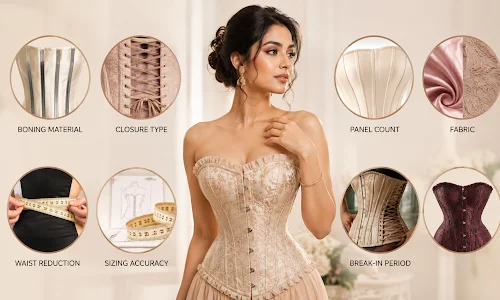
If a corset is genuinely what you’re after — for styling, for an event, for that sharp waistline in photos — here’s what actually separates a good one from a waste of money:
- Boning material — steel boning holds its shape far longer and feels sturdier than plastic. Plastic bends out of shape after a few wears and loses its structure quickly.
- Closure type — lace-up backs give you more room to adjust the fit over time, while busk (hook) fronts are quicker to get on and off but offer less flexibility once sized.
- Panel count — more panels usually means a more contoured, body-hugging shape. Fewer panels tend to sit flatter and less sculpted.
- Fabric on the outer layer — satin and brocade work well for occasion wear and styled outerwear, while cotton coutil is sturdier and better if you want more durability with regular use.
- Waist reduction claims — be wary of anything promising a dramatic ireduction in waist size overnight. A well-made corset shapes gradually and comfortably; anything claiming instant, extreme results is usually cutting corners on comfort.
- Sizing accuracy — corsets run on precise waist measurements, not your usual dress size. Always check the brand’s actual size chart, since a size that’s off by even an inch can be the difference between wearable and unbearable.
- Break-in period — a good corset will feel snug on the first wear and loosen slightly with use. If it feels painful rather than firm right out of the box, it’s likely the wrong size, not something you “break into.”
Best Choice by Occasion
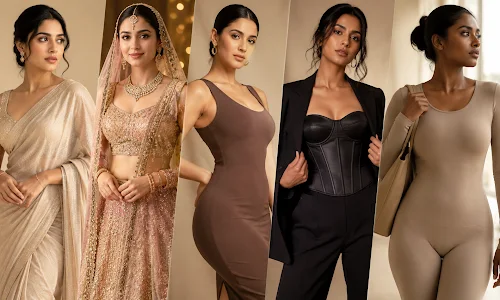
Occasion: Saree
- Corset: Not recommended. The rigid boning creates visible ridges and lines under thin, drapey saree fabric, and it doesn’t move with the pleats or pallu.
- Body shaper: The better fit. A seamless, full-body shaper smooths the waist and tummy under the blouse and petticoat without adding bulk at the seams.
Occasion: Wedding or festive event (full-day wear)
- Corset: Only works for a couple of hours at most. By the time you’re through the ceremony, the sitting, eating, and rigidity start working against you.
- Body shaper: The better fit. A front-zip, four-way stretch shaper holds its shape through a 6–8 hour event without the restriction a corset causes by hour two.
Occasion: Western wear (bodycon dresses, fitted trousers, blazers)
- Corset: Can work as a visible styling piece over a blazer or shirt, but it’s not meant to be worn hidden under fitted fabric — the boning will show through.
- Body shaper: The better fit for wearing underneath clothes. A seamless finish avoids visible panty lines or edges under thin, stretchy fabric. Complete the look with a T-shirt bra, balconette bra, or plunge bra, along with seamless thong panties or hipster panties, depending on your outfit.
Occasion: A themed party, photoshoot, or fashion-forward outfit
- Corset: The better fit. If you’re styling it as an outer layer — under an elegant push-up bra, over a shirt, with high-waisted trousers, as a statement piece — this is exactly where a corset earns its place. It’s a fashion choice here, not a shaping solution.
- Body shaper: Works fine underneath the outfit for extra smoothing, but won’t give the same dramatic, sculpted look a corset provides as outerwear.
Occasion: Travel or long work days
- Corset: Not recommended. Restricted breathing and movement make it a poor choice for anything beyond a couple of hours.
- Body shaper: The better fit. Breathability and freedom of movement matter most when you’re wearing something for 8+ hours, and a nylon-spandex shaper is built exactly for this.
The pattern here is simple: corsets earn their place when they’re visible and worn for a short, styled moment. Body shapers earn their place any time you need shaping and comfort for a full day, hidden under your outfit.
Shop Featured Shapewear
-
 Flat 20% Off,New ArrivalFlat 20% Off
 -
 New ArrivalFlat 20% Off,New ArrivalFlat 20% Off
 -
 Flat 20% Off,New ArrivalFlat 20% Off
 -
 Flat 20% Off,New ArrivalFlat 20% Off
 -
 New ArrivalNew ArrivalFlat 25% OffUnited Classic Sapphire Blue Flawless Fit Side Slit Saree Shapewear₹899 ₹1199.00 (25% OFF)Add to Bag
 -
 New ArrivalFlat 25% OffUnited Classic Flowering Ginger Pink Flawless Fit Side Slit Saree Shapewear₹899 ₹1199.00 (25% OFF)Add to Bag
The Bottom Line
Chasing a “perfect silhouette” shouldn’t mean choosing between looking good and being able to breathe. A corset has its place — as a fashion statement, for a themed event, for a few dramatic hours. But if you want something that shapes you comfortably from morning meetings to late-night functions, that moves with your body instead of against it, and that’s actually built for real bodies (including plus-size bodies) in mind, a good stretchable body shaper wins, every time.
FAQs
1. Is a corset the same thing as a body shaper?
No. A corset uses rigid boning and laces to dramatically reshape the waist, while a body shaper uses stretchable fabric to smooth and shape the whole torso comfortably.
2. Can I wear a body shaper every day?
Yes. Unlike a corset, a well-fitted stretchable body shaper made from breathable fabric like nylon-spandex is designed for all-day, daily wear.
3. Which is better for plus-size women, a corset or a body shaper?
A body shaper is generally the better choice for plus-size women, since it's designed with inclusive sizing, genuine stretch, and even shaping — rather than rigid boning that can dig in over larger areas.
4. Does a body shaper help with posture?
Yes, to a degree. Most body shapers offer gentle back and core support that encourages better posture, without the rigidity or restriction of a corset.
5. Will a corset or body shaper help me lose weight?
Neither is a weight-loss solution. Both work by compressing and smoothing the body's appearance temporarily — the effect disappears once you take the garment off.
6. Can I wear a body shaper under a saree or bodycon dress?
Yes, that's exactly what it's built for. A seamless, full-body shaper gives a clean line under sarees, bodycon dresses, and other fitted outfits without visible lines or bulges.