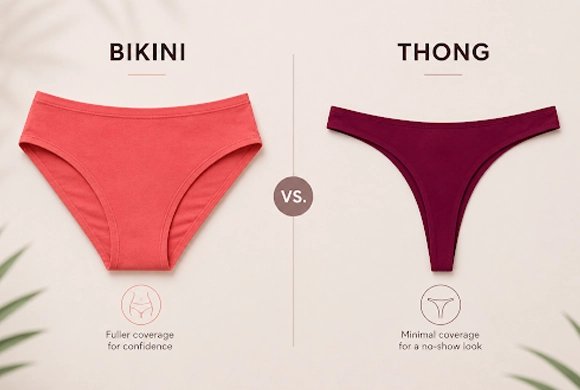
While bikini and thong panties may appear similar at first look, they serve quite different functions when wearing your clothing. Let me explain the differences so you know which one to choose for your outfit.
The key difference is coverage. Bikini panty’s moderate back coverage and high leg openings make them comfortable for daily use. Meanwhile Thongs have no back coverage for a barely-there feel, which prevents visible panty lines (VPL), making them the best choice for a seamless look in clothes like leggings and bodycon dresses.
Bikini: The Wardrobe Essential
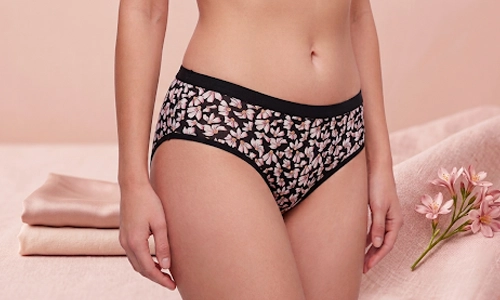
Bikini panties are designed to sit a few inches below the waist, exactly on the hips, providing full front coverage and medium-to-full back coverage. They create the ideal blend between a traditional brief and a new lower-rise cut. Bikini panties got their name from swimsuits, as they resemble the bottom of a bikini swimsuit.
Reasons to Choose a Bikini
All-Day Comfort: They are comfortable enough to be worn for a long duration. Which makes them a reliable lingerie staple.
Fabric Variety: They come in a wide range of fabrics, including cotton blends and modal, as well as fancier options such as lace and nylon mesh. Following the seamless bonding technology, seamless bikini panties have become quite a hit in the market.
Skin-Friendly: The soft waistband elastics make them extremely soft and gentle on the skin.
Versatility: It can be worn with most of the outfits, from jeans to loungewear.
Easy Movement: Bikinis come with a large leg opening, which allows you to move freely while providing moderate coverage.
Types of Bikini
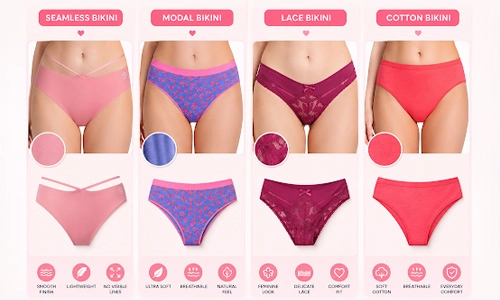
Classic Bikini: A timeless daily essential. These classic bikini panties sit flat at the lower waist and cover the back moderately.
Maximum Coverage Bikini: It has complete back coverage, quite like a hipster panty design, but comes with the classic bikini’s high, flattering leg cut.
High-Rise Bikini: If you are a hipster lover, you will love the high-rise bikini panties. The combination of a comfortable, high-waist fit and a big leg opening allows for easy movement.
Thong: The Invisible Supporter
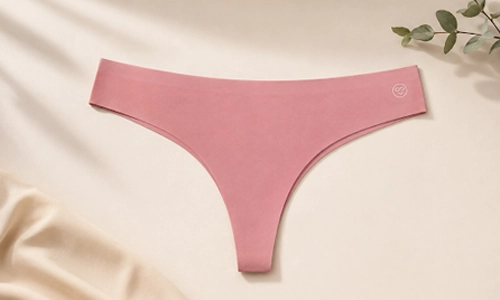
If the bikini is about reliable comfort, the thong is all about sleek fit. Thongs are designed with medium coverage in the front but very low coverage in the back, and in some designs, no coverage at all. The main goal of a thong is to be completely invisible.
Reasons to Choose a Thong
Sleek and Thin: The minimal fabric usage makes it look sleeker, which means there is no bulk under your clothes.
No Visible Lines: They are completely invisible under any outfit, so there is no chance for the Visible Panty Line (VPL).
Stretchable Materials: They are mostly made of high-performance synthetics like elastane, polyamide and spandex to ensure they fit the body perfectly. Thongs are available in cotton spandex and lace fabric too.
Types of Thongs
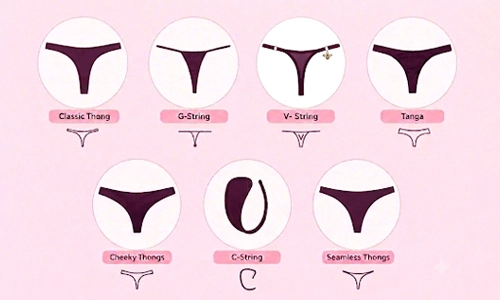
Classic Thong: This is the best-known thong type, which features a thick or thin waistband with a narrow strip of fabric down the back.
G-String: This is known for its minimal coverage, where the waistband and back strip are made of thin string-like elastic.
V- String: This is highly similar to a G-string but features a wider, V-shaped back panel rather than a thin piece of string.
Tanga: Offers a bit more hip coverage than a standard thong but still features a minimal back.
Cheeky Thongs: This type falls halfway between a bikini and a thong, having just enough coverage to skim the cheeks, showing off a bit of your back view.
C-String: A unique type of thong which features a held-in-place option and has no waistband supported by a flexible internal frame.
Seamless Thongs: These are ultra-comfortable and made using laser- cut or seamless bonding technology to create an invisible, form-fitting look under tight clothes.
Key Differences Between a Bikini and a Thong
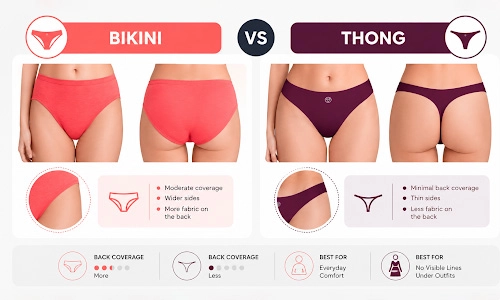
| Feature | Bikini | Thong |
| Fabric | Comfortable blends like cotton or modal | Seamless synthetics to delicate lace and silk |
| Coverage | Medium to full back coverage | Minimal to no back coverage |
| Visibility | May show panty lines under tight-fitting clothing | No visible panty lines (VPL) |
| Comfortability | Great for long hours | Feels weightless and barely there |
| Versatility | Excellent for everyday wear | Best for form-fitting outfits, occasional wear |
Styling Ideas
Choosing between a bikini and a thong usually comes down to what you’re wearing over them.
When to wear a Bikini |
When to wear a Thong |
|
|
Shop Featured Panties
-
 Buy 3 For 899
 -
 New ArrivalBuy 3 For 899
 -
 Buy 3 For 899
 -
 Buy 3 For 899
 -
 New ArrivalBuy 3 For 899
 -
 Buy 3 For 499
The Bottom Line
Keep in mind that bikinis offer more coverage; they could be paired beautifully with looser, structured and heavier fabrics. Meanwhile, when your outfit clings to your curves, a thong is an ideal option to keep curves looking smooth.