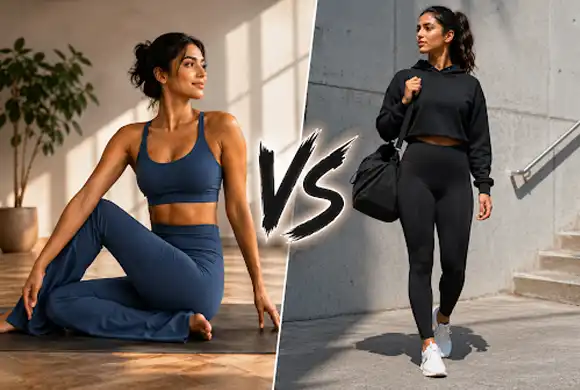
You’ve probably stood in the activewear aisle at some point, squinting at a tag, genuinely unsure whether you’re holding yoga pants or leggings. The brands don’t make it easy. Half the time, the label says one thing and the cut says another. And sure, people use the words interchangeably — but they really shouldn’t.
Yoga pants are built to perform. Thick, stretchy in every direction, sweat-wicking, and designed to stay put when you’re upside down or mid-squat. They’re proper athletic gear. Leggings, however, are more of a lifestyle item. Comfortable, usually thinner, great for everyday wear — but most of them aren’t made to handle a serious workout. These two things were built for different lives. Different fabrics, different construction, different purposes. Once you understand the actual differences, grabbing the wrong pair stops being a thing.
1. Fabric First — This Is Where It Actually Starts
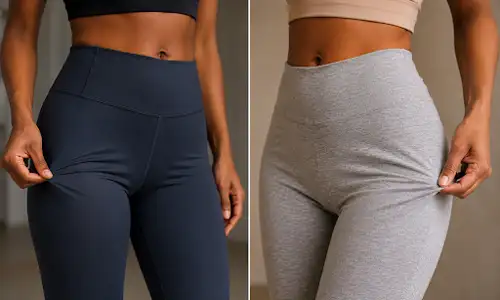
Most people focus on how something looks. The smarter move is to pay attention to what it’s made of.
Yoga pants use performance fabrics — nylon-spandex or polyester-elastane blends, chosen specifically because they move sweat away from your skin, hold their shape, and don’t break down after fifty washes. The fabric density (measured in GSM — grams per square metre) typically sits between 220 and 300. Anything under 180 GSM? Probably leggings, no matter what the tag claims.
Leggings are all over the place. Cotton-spandex is the most common fabric. It’s soft and comfortable but absorbs sweat instead of wicking it away. Fine for a coffee run. Not ideal for a hot yoga class.
2. The Stretch Is Not the Same
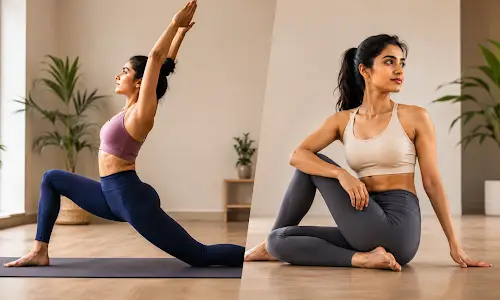
Yoga pants stretch four ways — up, down, left, right, all at once. That matters when you’re in a deep lunge or holding a pose that requires your body to go places it doesn’t normally go. The fabric moves with you and then comes back. No pulling, no bunching, no weird distortion.
Most leggings stretch two ways — across the leg, but not lengthwise. Perfectly comfortable for walking around or sitting at a desk. The moment you try something more demanding, you’ll feel the difference.
3. The See-Through Problem (Yes, We’re Talking About It)
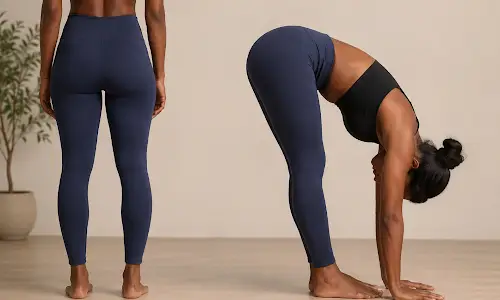
This is the one people don’t want to bring up, but it matters.
Good yoga pants are designed to stay opaque even when you’re bent over in a forward fold.
A lot of leggings go sheer the second you stretch them. Bright light, deep squat, downward dog — suddenly very transparent. If you want to test any pair you already own: put them on, step in front of a mirror in decent light, and do a deep bend.
If you can see anything through the fabric, those are leggings. Yoga pants maintain their coverage no matter how far you stretch.
4. The Waistband Tells You A Lot
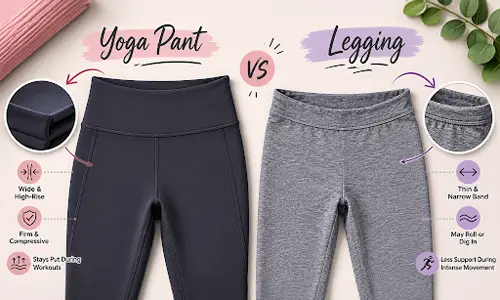
Yoga pants almost always have a wide, high-rise waistband — usually three to five inches of firm, compressive fabric that doesn’t roll, fold or slide during movement. Some have a hidden drawstring. The whole point is that once it’s on, it stays on.
Leggings use thinner elastic bands that are fine for daily comfort but tend to roll or dig in the moment you start moving seriously. They’re not built for that kind of use, and it shows.
5. The Details Most People Never Notice
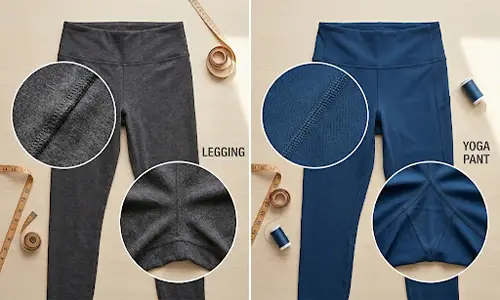
There are two construction details that separate real athletic gear from everything else.
The first is a gusset/extra lining — a small extra panel of fabric sewn into the crotch area. It gives you actual room to move your legs apart fully without the seam pulling or eventually tearing. Most yoga pants have one. Most leggings don’t.
The second is flat-lock seaming — where the seam lies flat against your skin instead of folding over itself.
So Which One Do You Actually Need?
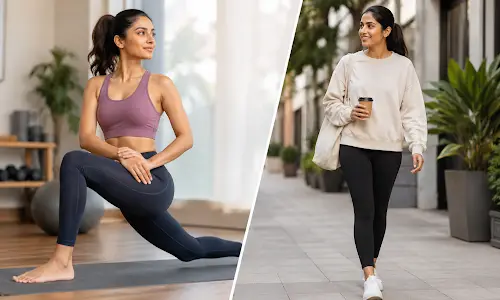
Reach for yoga pants and a high-impact sports bra when you’re working out properly — yoga, Pilates, HIIT, barre, cycling or anything where you’re sweating and moving through a full range of motion.
Opt for leggings and a casual everyday bra when you’re not working out — casual outfits, travel, running errands and layering under things. They’re versatile, usually cheaper, and honestly better for everyday life than performance gear.
The honest answer is that most people need both. They just serve completely different purposes, and treating them as interchangeable is what leads to uncomfortable workouts and wasted money.
At a Glance: The Key Differences
| Feature | Yoga Pants | Leggings |
| Primary Purpose | Athletic performance, yoga, gym | Casual wear, light activity, fashion |
| Fabric Weight | Medium to heavy (200–350 GSM) | Light to medium (80–200 GSM) |
| Stretch Type | Four-way stretch | Usually two-way stretch |
| Moisture Management | Wicking & quick-dry technology | Varies; often absent |
| Opacity | Squat-proof, fully opaque | Can be sheer under stretch |
| Waistband | Wide, high-rise, non-roll | Thinner, rolled or standard elastic |
| Gusset / Crotch Panel | Typically yes (gusseted) | Usually no |
| Flat Seams | Yes, reduces chafing | Not always |
| Dress-Down Styling | Can work, less versatile | Very versatile, streetwear-friendly |